
Archives

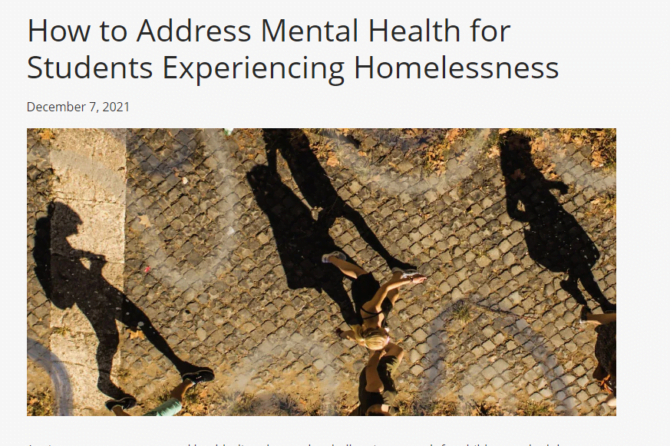
How to Address Mental Health For Students Experiencing Homelessness
This website gives an overview of student homelessness and housing, how this affects their mental health, and strategies for supporting the mental health of students experiencing homelessness.
Read moreTrauma Screening in Children & Adolescents
TCTY collaborated with ND Pediatric Mental Health Care Access Program and ND Behavioral Health to develop a website for the training of the trauma screening tool: The University of Minnesota’s Traumatic Stress Screen for Children and Adolescents (TSSCA). Unrecognized and untreated child traumatic stress can lead to the development of trauma-related symptoms. These symptoms can persist and worsen over time, making it critical to identify them early.
Read more
Tips for talking with children & youth of different age groups after a disaster or traumatic event: a guide for parents, caregivers, & teachers
Adult support and reassurance is the key to helping children through a traumatic time. This resource helps with tips with how to talk with youth of all ages after traumatic events.
Read moreTip Sheet: Age-Appropriate Sexual Behavior
Read moreThis tip sheet provides guidance on what age-appropriate sexual behaviors may look like. It is important as clinicians, caregivers, and parents to understand and recognize what the typical age-related behaviors are and what maladaptive behaviors may be. 
Human Trafficking: Recognize the Signs
Read moreThis webpage is a great resource for clinicians, parents, and caregivers that provides information about recognizing the signs of human trafficking. Whether it is labor trafficking or sex trafficking, it is important to know the signs so that you can potentially help someone in need and prevent future trafficking occurrences. 
Helping Teens with Traumatic Grief: Tips for Caregivers
Read moreEveryone grieves in their own way, this also applies to teens. It is important as a caregiver to recognize that some of the behaviors your teen may be presenting are due to traumatic grief if they have experienced a recent loss. This tip sheet provides insight into how to respond and help your teen in a difficult time of traumatic grief. 
Suicide Prevention in Schools: Strategies for COVID-19
Read moreThis article provides information on strategies for suicide prevention within schools during COVID-19. With increased cases of COVID-19 again, increased rates of suicide may follow. It is important to have strategies within schools for children who may be experiencing mental health challenges during this difficult and unknown time. 
Domestic Violence and Children: Questions and Answers for Domestic Violence Project Advocates
Read moreChildren may be witnesses of physical abuse, emotional abuse, or even experience abuse alongside a parent or caregiver. This fact sheet provides answers to frequently asked questions about the affects of domestic violence on children and ways to advocate and support those children. 
Complex Trauma: Facts for Service Providers Working with Homeless Youth and Young Adults
Read moreAbout 1 million to 1.6 million youth experience homelessness in the US in a given year. It is important to know how to interact, support, and provide for these youth as a mental health professional and advocate. Read this fact sheet to find out how homelessness affects youth and ways you can help individuals overcome this challenge.


- 1
- 2
© 2025 Treatment Collaborative for Traumatized Youth. All rights reserved.