
Archives

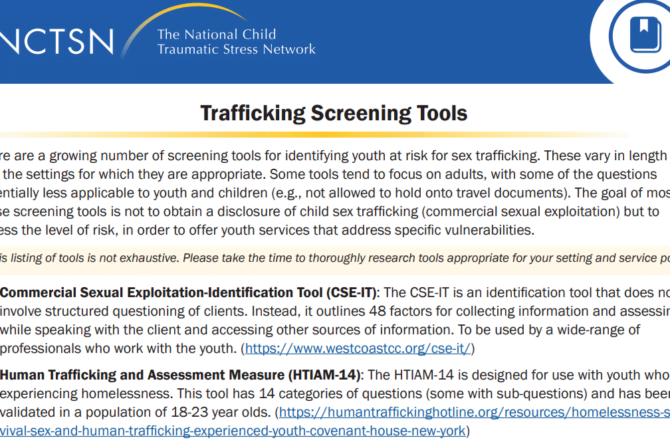
Trafficking Screening Tools
Read moreThe following resources provides multiple trafficking screening tools that can be used with youth as well as questions to ask youth if you do not have access to other tools. Grief Support and Resources
This website has grief resources for kids, teens, young adults, parents/caregivers, living with an advanced serious illness and supporters of grievers.
Read moreImproving Supports for Male Survivors of Sexual Exploitation
Resource for services providers to help eliminate biases while increasing support and awareness to help boys and young men thrive. There is additional resources listed, including: Understanding the Commercially Sexual Exploitation of Boys & Young Men & Understanding Commercial Sexual Exploitation of LGBTQIA2S+ Youth.
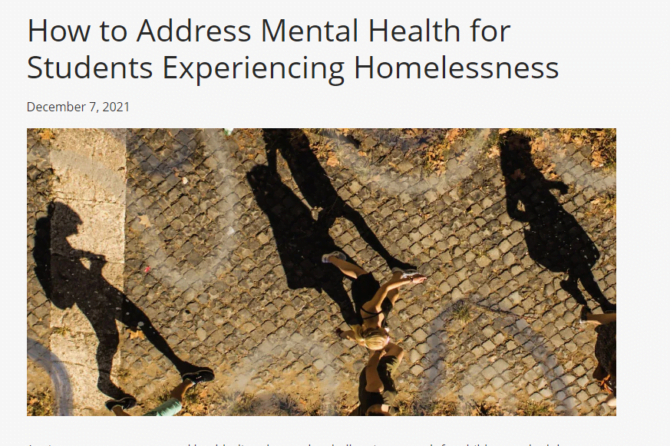
Read moreHow to Address Mental Health For Students Experiencing Homelessness
This website gives an overview of student homelessness and housing, how this affects their mental health, and strategies for supporting the mental health of students experiencing homelessness.
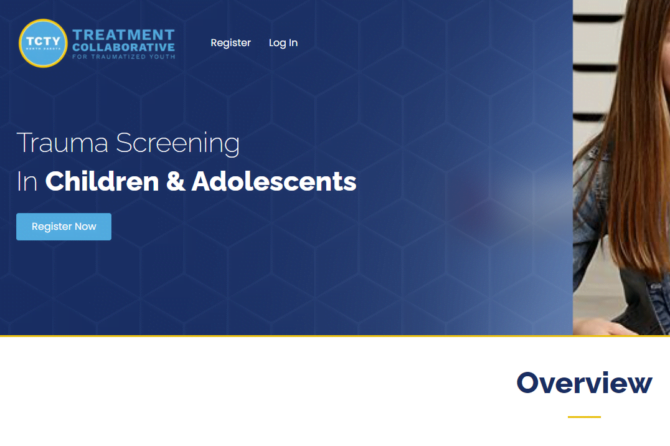
Read moreTrauma Screening in Children & Adolescents
TCTY collaborated with ND Pediatric Mental Health Care Access Program and ND Behavioral Health to develop a website for the training of the trauma screening tool: The University of Minnesota’s Traumatic Stress Screen for Children and Adolescents (TSSCA). Unrecognized and untreated child traumatic stress can lead to the development of trauma-related symptoms. These symptoms can persist and worsen over time, making it critical to identify them early.
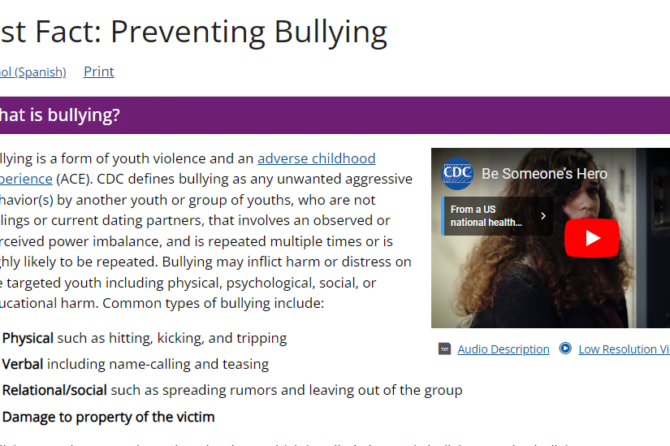
Read moreFast Fact: Preventing Bullying
This website defines bullying and also lists out ways to prevent bullying, including additional resources on prevention and the Be Someone’s Hero short video.
Read moreComplex Trauma Workbook
What is Complex Trauma? A Resource Guide for Youth and Those Who Care About Them.
Read moreUniversity of Minnesota’s Traumatic Stress Screen for Children and Adolescents (TSSCA)
The University of Minnesota’s Traumatic Stress Screen for Children and Adolescents (TSSCA) is designed to provide clinicians, caseworkers, educators, and other staff with a tool for screening children and adolescents (ages 5-18 years) that have or may have experienced a traumatic event and are in need of services.
Read moreResources in Response to the Fargo North Dakota Shooting
In response to the recent events affecting our Fargo, ND community, NCTSN has created this resource guide for those seeking information on next steps.
Read more
© 2025 Treatment Collaborative for Traumatized Youth. All rights reserved.